

Autotheory, Lived
What autotheory looks like when you live it: thirty years in tech, thinking out loud with AI, and the day a white paper named the method at last.
Published · 5 min read
He caught a line in his own unassisted writing that walked like the machine he writes with. Detectors and editors hunt that voice, and now it belongs to people too. Search engines settled this years ago by judging the page, not who wrote it. Four questions to ask of any page instead.
Read the full chapter →Free to read on The Conversation Daemon, where every piece of the book is published.
You cannot sort what writes alike. You can still tell what is worth reading.
Everyone worries about the machine learning to write like us. That part is finished.
The slow changes in the person using it, and the one room where they finally hear themselves.
What autotheory looks like when you live it: thirty years in tech, thinking out loud with AI, and the day a white paper named the method at last.
Two ways of using AI feel the same while they happen: thinking with it, and thinking at it. One changes your mind. The other only makes you feel understood. Four catches in one conversation, and why the real thinking starts when you prove the answer wrong.
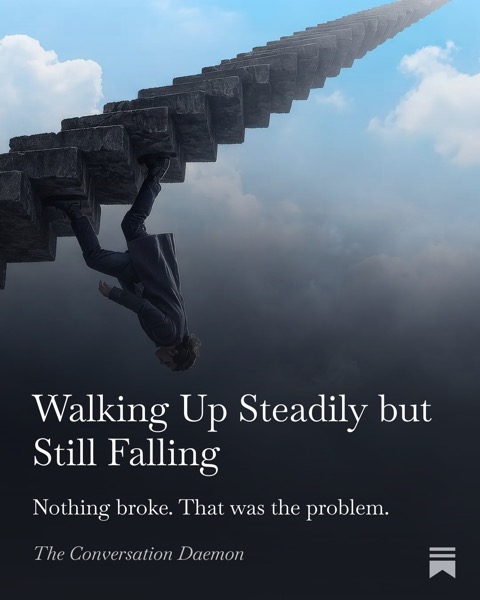
There is a way to fall that feels exactly like walking up. Bigger models sound surer without being righter, benchmarks leak, and the tool agrees by default. Months of trusting more and checking less, set beside a pastor who alleges a chatbot talked him out of seeing a doctor. The first Spiral of Death piece.