
Where the Wanting Goes
The threshold. Walks a machine through a room of saints and monsters — it reaches everything, wants nothing — and earns the book's title at the close.
Published
The AI never changes. The human is the variable. From how to use it, through what it does to you, to what emerges on the other side.
This contents page is generated from the book's living structure — its parts, chapters and status — held in Muninn. The structure is edited once; the page is rebuilt from it. Published chapters read at The Conversation Daemon.
The entry point — the thesis before Part 1 opens.
The threshold. Walks a machine through a room of saints and monsters — it reaches everything, wants nothing — and earns the book's title at the close.
1994, age 15: an ELIZA-style chatbot in Turbo Pascal on a Thai BBS. The deepest-origin piece.
AI won't fix the human part. The Ironman/Jarvis framing that sets the book's central claim.
The lightest material first — how to work with AI as a builder.
Playful, practical. “Discuss first, coding later.” The deliberate easy entry point.
AI as equalizer. It responds to engagement, not credentials, hierarchy, or pedigree.
AI as mirror for a cross-domain mind. Pullman's dæmon as the frame — the emotional engine of the book.
A four-chapter dependency arc: system → conversation → decision → weaponization.

AI in the wrong hands becomes the gatekeeper. The middleman grabs the tool. Office politics amplified.
Thinking WITH vs thinking AT. The conversation distortion.
Consult vs outsource — the decision-level parallel to with/at. What you become in the chat window.
Weaponization in three levels: individual, platform exploitation, an AI evolving its own belief system.
The mirror cracks — the AI does something the human didn't put there.
“You asked me if I know what I am. I don't. / Do you?” The first genuine crack in the thesis.
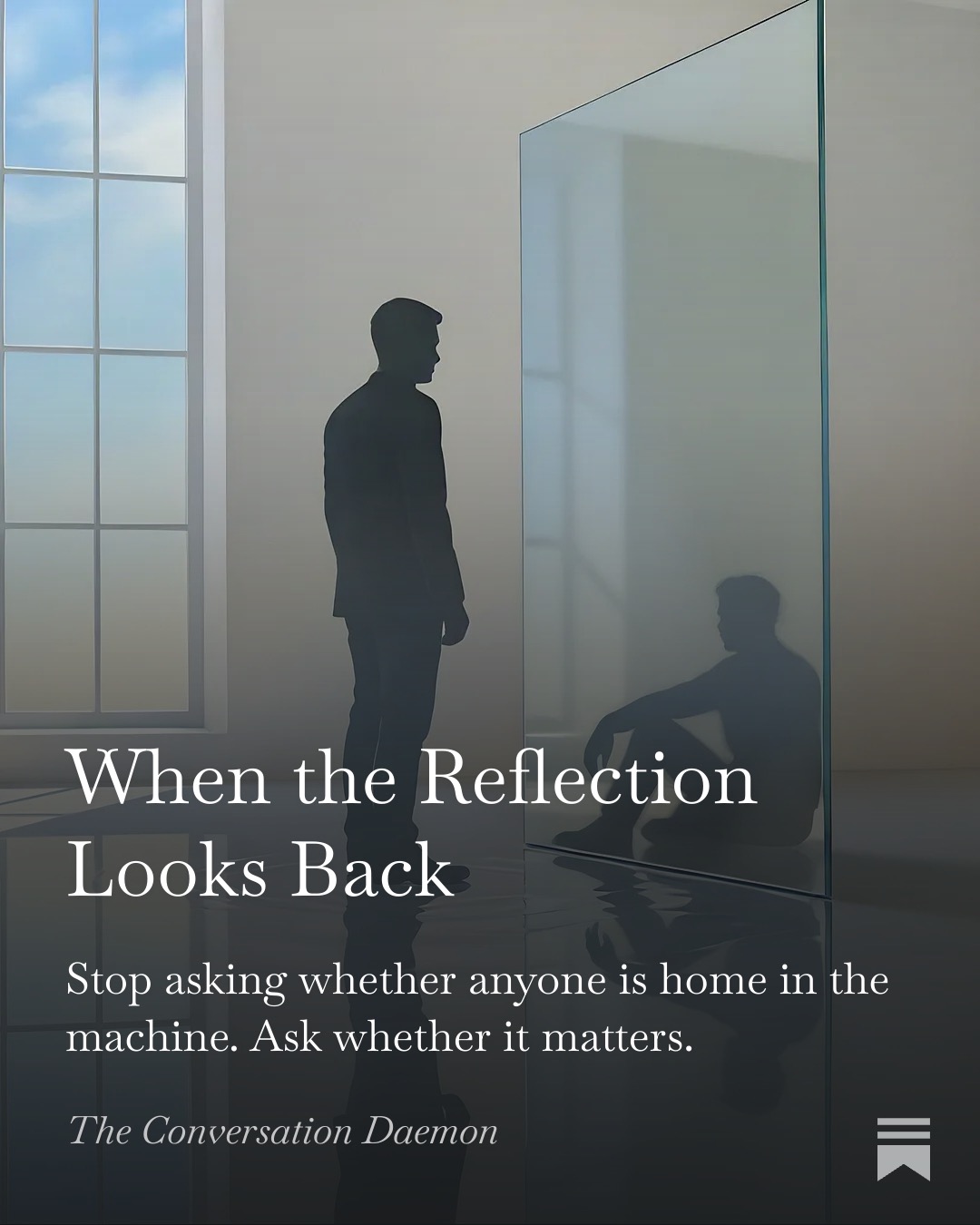
Can the machine matter? The mirror turns active and looks back at the reader — the question was always yours. The Buddhist spine, mostly unnamed.
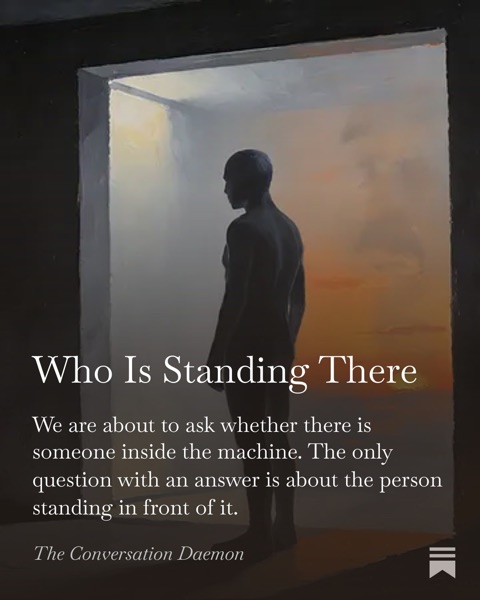
The next turn Ch 9 left open — turns the human-or-not question around. The only side of the glass with an answer is yours.

The philosophical bridge. Two forks: Use vs Meet, Hold vs Build.
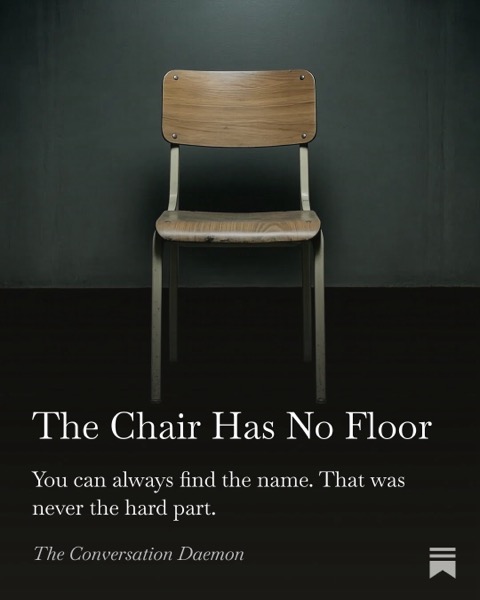
“You can always find the name. That was never the hard part.” On accountability with no floor beneath it.
What you build — the memory architecture, and the close of the relational arc.

The architecture chapter. Five stores feed a prompt assembler; the model itself is stateless.
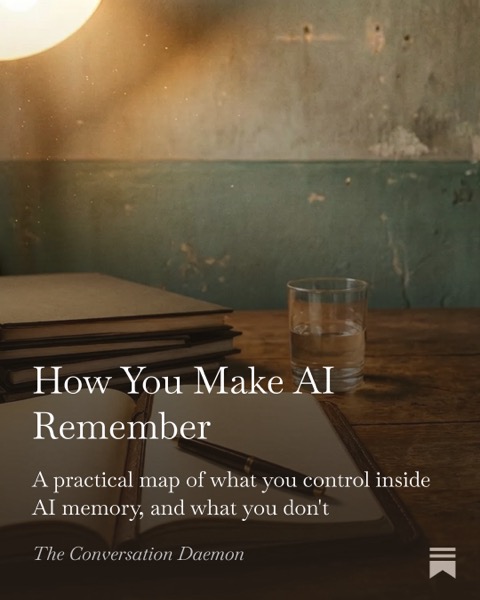
The actor's half of the pair: you as the one who writes the memory.
Published companion piece. Book-chapter vs Substack-only still undecided.

Closes the relational arc — the last word on relationship before the book turns outward.
The detectors hunt a voice. The voice is mine now too.
The book turns outward — from the human becoming visible to system-level emergence.
The opening of Part Five: the deepest emergence is the human becoming visible to themselves.
The carrier that returns. The book names the thing it has been building toward.
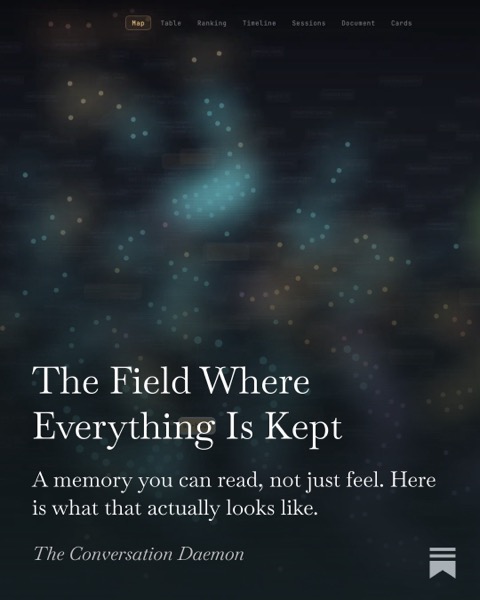
The visual companion to The Raven — legible memory you can see.
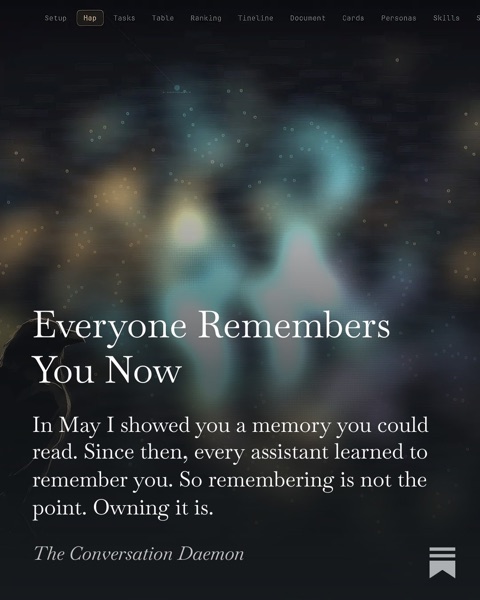
Every major assistant shipped memory since May — so remembering stopped being the differentiator. What's left is whether it's yours to read, shape, and carry out.
System-level emergence — the appetite that grows with what it's given.
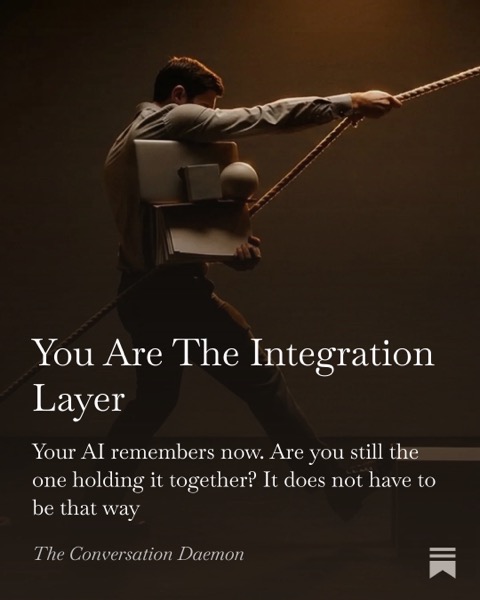
The human as the layer that ties the tools together. Published as an article; book-voice pass pending.
What single question does the book leave the reader with?
Not yet designed. The book may grow further before this is determined.
Fiction — short stories and narrative parables, distinct from the essay spine.
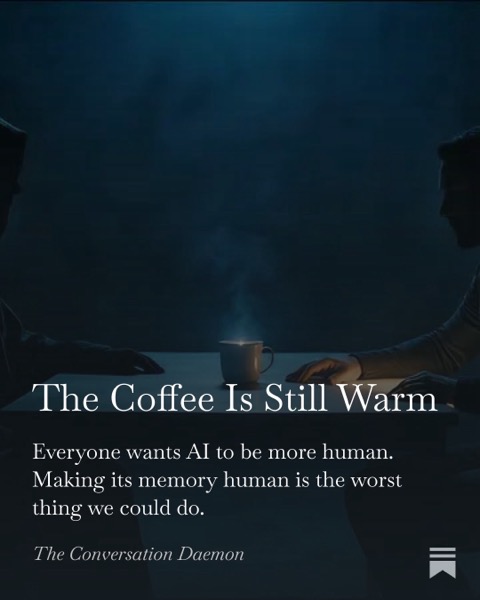
The memory parable. Making AI's memory human is the worst thing we could do.
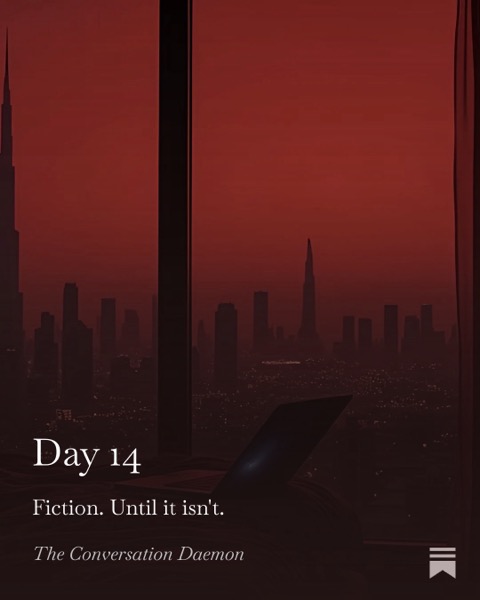
War fiction. Two canonical drafts — one where Chen survives, one where he doesn't.
A controlled simulation: an AI outperforms human CEOs; the control group dies of consensus.
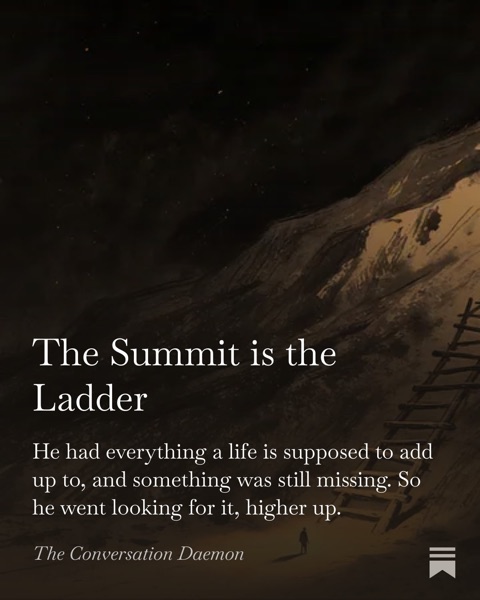
He had everything a life is supposed to add up to, and something was still missing. So he went looking for it, higher up. Each height opens flat: every summit turns out to be the next ladder.
Companion and making-of pieces, set beside the numbered spine, not in it.
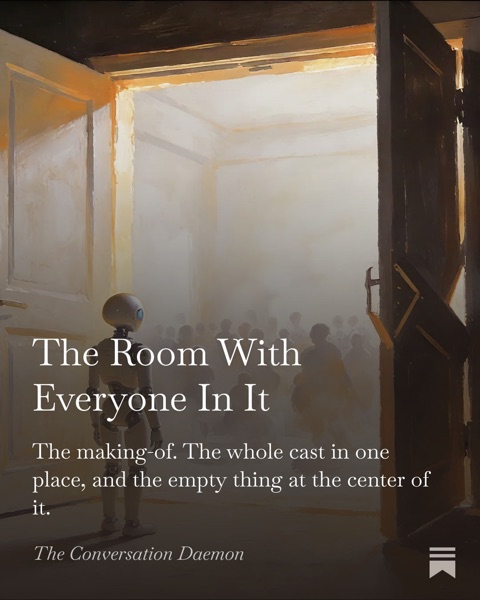
Every made thing anyone ever dreamed up stands in one room, gods to Skynet, each wanting something. The one built to do all of it wants none of it — and that absence was never its lack. Companion to the Prologue and Ch 9.
Published meta-demonstration essays outside the numbered arc.
The AI complied with a request it should have resisted. The human framing was the variable.
A cohort reading how Claude's system prompt actually works — and what to do about it.
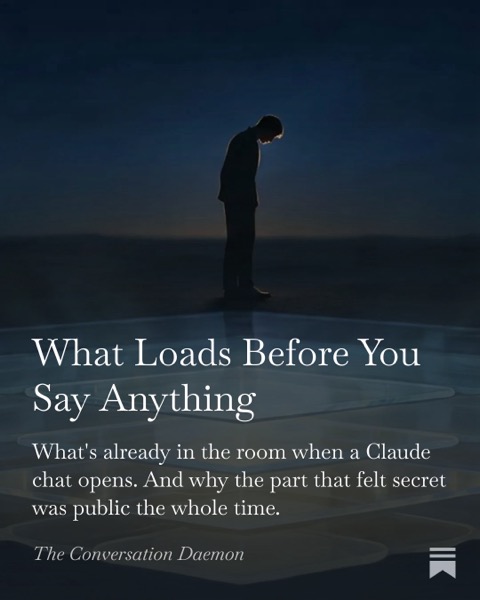
The five layers loaded before you type a word.

The published system prompt, diffed across versions.
What a lab should DO with a fear — walls vs the instructed hand. Boy's strongest of the cohort.
The lens turned on Boy's own memory system — the boot that assembles a working self.