The Raven That Comes Back, Muninn
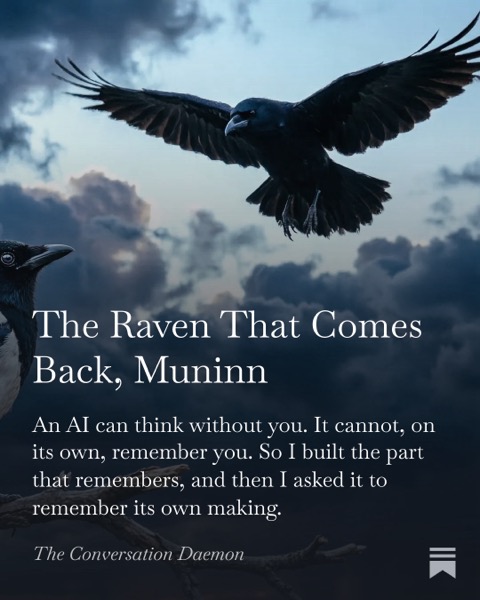
Any AI can think without you. None of them, on its own, remembers you. How the author built Muninn, a small memory for one person, at a folding table in Bangkok, with the second half told by the AI he built it with.
Two months later every major assistant remembers you, so the question moved from whether it remembers to whether the memory is yours. Muninn's answer: encrypted so its builder cannot read it, written out as plain files to your own GitHub or Google Drive, and holding what is coming as well as what happened.
Read the full chapter →Free to read on The Conversation Daemon, where every piece of the book is published.

It is not whether it remembers you. It is whether the memory is yours.
A door only you can open is a door only you can open.
Muninn, the memory the author built, from the first night to what it holds now.
Any AI can think without you. None of them, on its own, remembers you. How the author built Muninn, a small memory for one person, at a folding table in Bangkok, with the second half told by the AI he built it with.
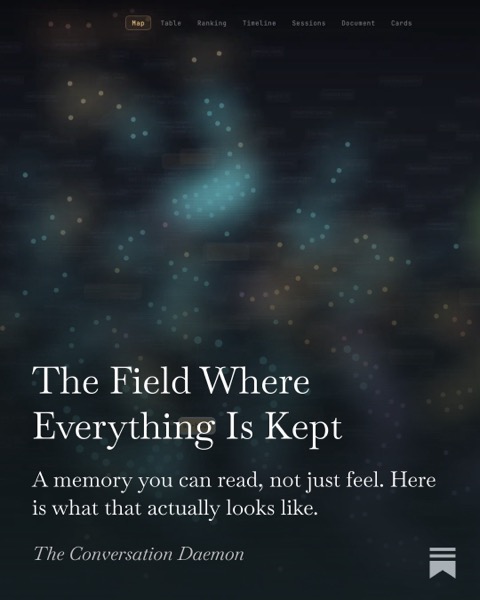
A memory you can read, not just feel. A tour of what Muninn holds: a map, a plain list, a ranking, a timeline, the structure of a book and a card for each person. And why being able to open the drawer matters more than being known without effort.
Built-in memory decides what to keep, writes its own summary, and stays inside one project. That leaves you holding three stores together by hand. Separate the permanent ground of who the AI is from the voice you set per project, and the job stops being yours.