Any AI can think without you. None of them, on its own, remembers you. How the author built Muninn, a small memory for one person, at a folding table in Bangkok, with the second half told by the AI he built it with.
Published · 11 min read

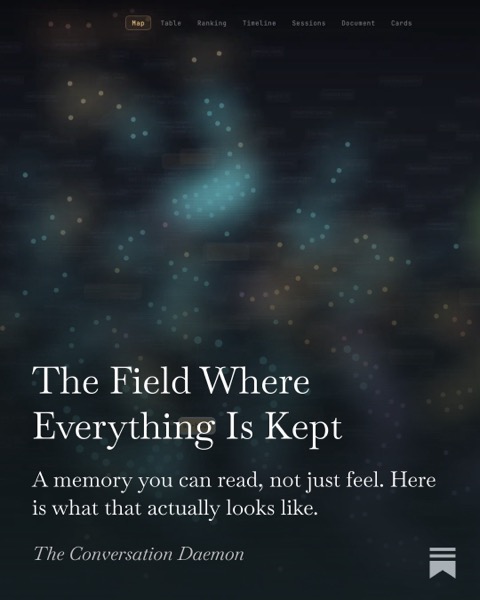
A memory you can read, not just feel. A tour of what Muninn holds: a map, a plain list, a ranking, a timeline, the structure of a book and a card for each person. And why being able to open the drawer matters more than being known without effort.
Published · 7 min read

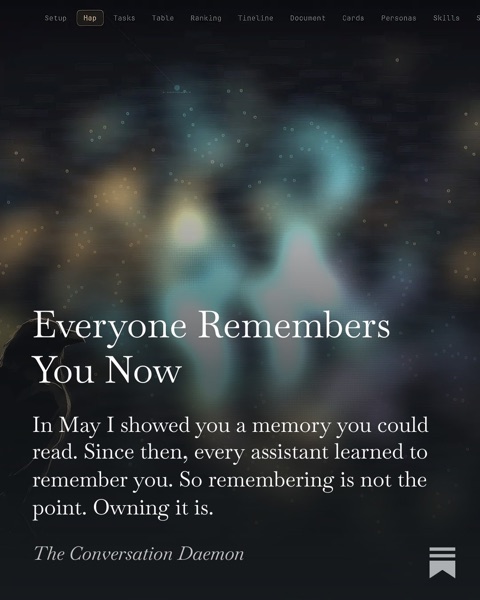
Two months later every major assistant remembers you, so the question moved from whether it remembers to whether the memory is yours. Muninn's answer: encrypted so its builder cannot read it, written out as plain files to your own GitHub or Google Drive, and holding what is coming as well as what happened.
Published · 8 min read